


Introduction
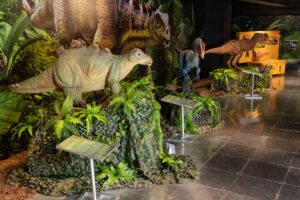
Animatronics has revolutionized the way we experience the past. Today, thanks to this technology, it is possible to recreate dinosaurs with a surprising level of realism, capable of capturing attention and creating memorable experiences in a variety of settings.
But how does it actually work?
How do animatronic dinosaurs work?
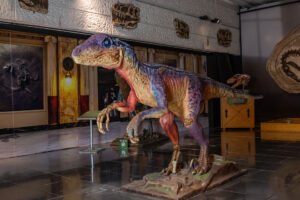
Animatronic dinosaurs combine mechanical engineering, advanced electronics, and artistic design to achieve realistic movements.
Inside, they are equipped with systems that control actions such as breathing, head movement, jaw opening, and other gestures that simulate natural behavior. These systems are designed to operate precisely and continuously in exhibition settings.
Materials and realism: the key to the experience
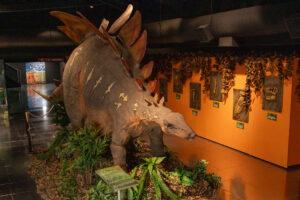
Realism does not depend solely on movement. It also involves specialized materials that replicate the texture and appearance of skin, as well as sound systems that recreate possible vocalizations.
The combination of these elements results in a portrayal that is both believable and appealing to the audience.
More than just entertainment: an educational tool
In addition to its visual appeal, animatronics has a strong educational component. It allows complex concepts to be presented clearly, making learning easier for children, teenagers, and adults.
For this reason, it has become an important tool in places such as museums, zoos, and parks, where the goal is to combine knowledge with engaging experiences.
Use in public and commercial spaces
Today, animatronics is used not only for educational purposes, but also as a strategy to attract visitors and enhance the user experience.
These types of displays help generate greater interest, increase the length of time visitors spend at the venue, and offer unique experiences in different areas.
Conclusion
Animatronics doesn't just bring dinosaurs to life; it bridges the past and the present through technology. Its ability to combine realism, education, and experience makes it a key tool in the evolution of modern exhibitions.