


Introduction
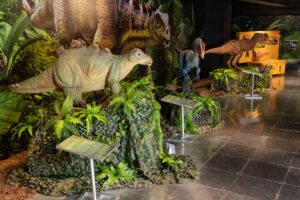
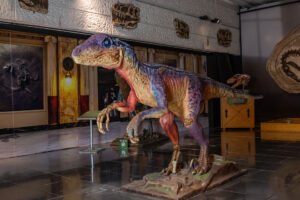
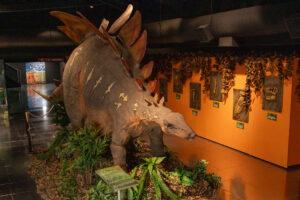
Animatronics has revolutionized the way we experience the past. Today, thanks to this technology, it is possible to recreate dinosaurs with a surprising level of realism, capable of capturing attention and creating memorable experiences in a variety of settings.
But how does it actually work?
How do animatronic dinosaurs work?
Animatronic dinosaurs combine mechanical engineering, advanced electronics, and artistic design to achieve realistic movements.
En su interior, cuentan con sistemas que controlan acciones como la respiración, el movimiento de la cabeza, la apertura de la mandíbula y otros gestos que simulan comportamientos naturales. Estos sistemas están diseñados para operar de forma precisa y continua en entornos de experiencias.
Materials and realism: the key to the experience
Realism does not depend solely on movement. It also involves specialized materials that replicate the texture and appearance of skin, as well as sound systems that recreate possible vocalizations.
The combination of these elements results in a portrayal that is both believable and appealing to the audience.
More than just entertainment: an educational tool
In addition to its visual appeal, animatronics has a strong educational component. It allows complex concepts to be presented clearly, making learning easier for children, teenagers, and adults.
For this reason, it has become an important tool in places such as museums, zoos, and parks, where the goal is to combine knowledge with engaging experiences.
Use in public and commercial spaces
Today, animatronics is used not only for educational purposes, but also as a strategy to attract visitors and enhance the user experience.
Este tipo de experiencias ayuda a generar mayor interés, incrementar el tiempo de permanencia y ofrecer propuestas diferenciadas dentro de distintos espacios.
Conclusion
La animatrónica no solo recrea dinosaurios; crea un vínculo entre el pasado y el presente a través de la tecnología. Su capacidad para combinar realismo, aprendizaje y experiencia la convierte en una herramienta clave en la evolución de las experiencias modernas.